
The Journey of the Second Company
All Quiet on the Western FrontTraces the Second Company from its initial strength of 150 men through constant attrition, culminating in a remnant of 32 after a major bombardment.
increasing Bearing strength in each event
 decreasing
Bearing strength in each eventdecreasingCompany at Rest
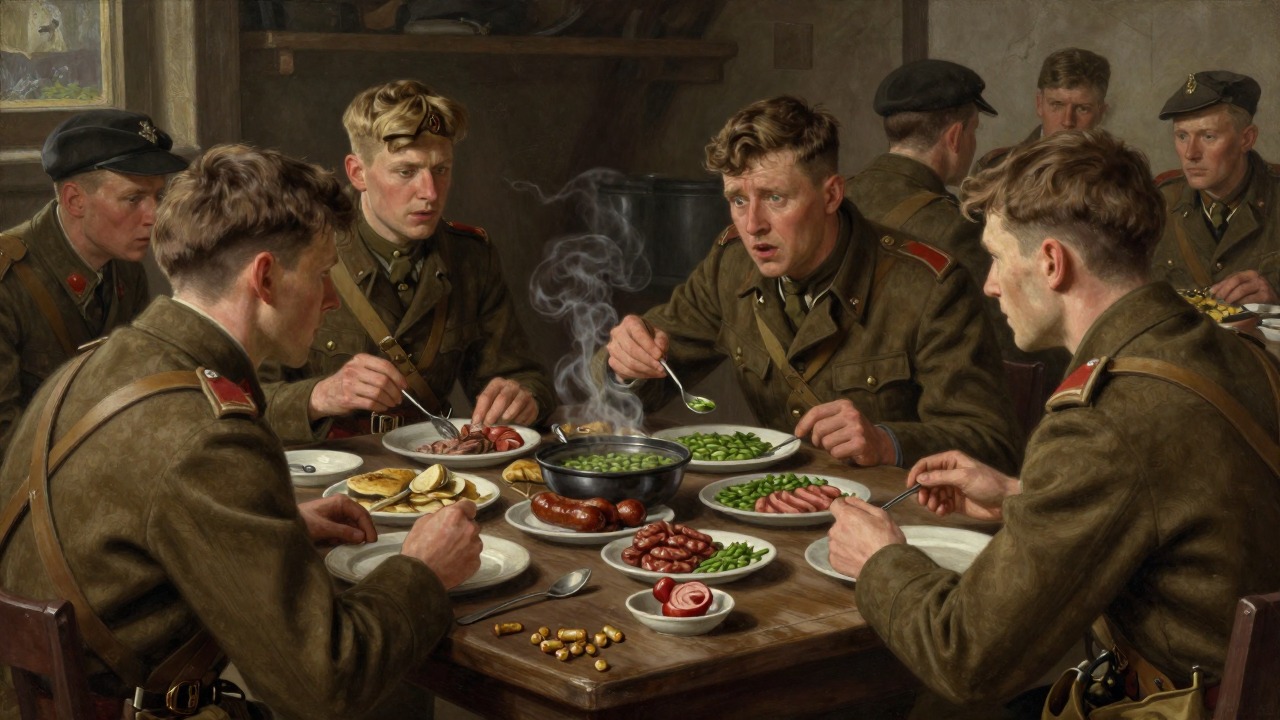
The Company at Rest
Unexpected Windfall
The Second Company, recently relieved, enjoys a rare abundance of food and tobacco due to a quartermaster's miscalculation after heavy losses. The cook, Ginger, is bewildered by the surplus, and the men feast on double rations of beef, beans, sausage, and bread. Paul Bäumer describes the contentment of the moment, the camaraderie of the latrine, and the simple pleasures of the meadow.
The Memory of the Front
Despite the peace, the soldiers carry the weight of the front. The conversation turns to their schoolmaster Kantorek, who urged them to enlist, and to the first death they witnessed—Joseph Behm. The idyllic setting is undercut by the knowledge that many of their comrades are gone.
The Only Reality
The chapter establishes the central theme: the war has destroyed their youth and left them with only the facts of survival. The double ration of rations is a symbol of the arbitrary nature of life and death in the trenches.
The Bombardment and the Graveyard
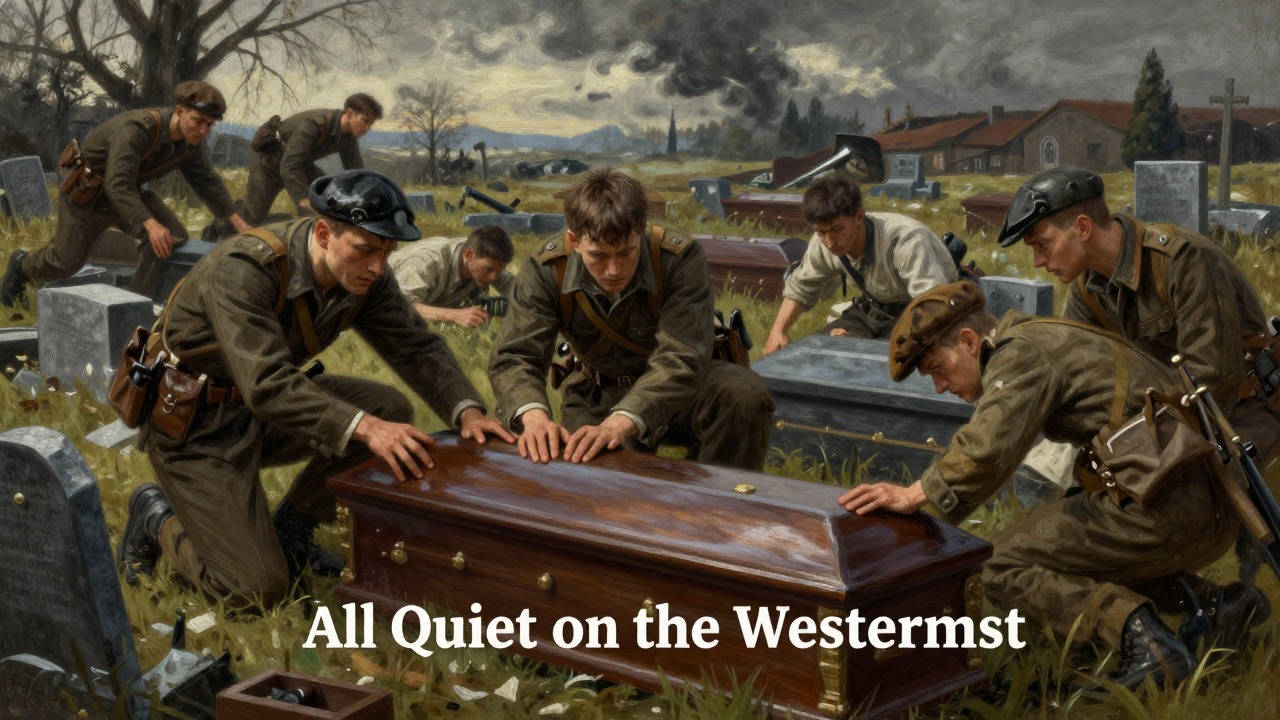
The Bombardment and the Graveyard
Into the Barrage
The company is sent to the front for wiring fatigue. The tension mounts as they approach the line. The bombardment begins, and the men take cover in a graveyard. Paul describes the terrifying experience of lying among coffins, using them as shelter. The earth itself becomes a refuge.
Gas Attack and First Aid
A gas attack forces them to don masks. Paul and Kat help a wounded recruit. The horror of the gas victims is vividly recalled. The bombardment lifts, and they carry the wounded man back, leaving the dead in the upturned graves.
The Aftermath
The morning after, they return to the lorries, exhausted. The company's strength is reduced. The rain falls on them and on the dead. This node encapsulates the random brutality of the front and the thin line between life and death.
The Company Mustered
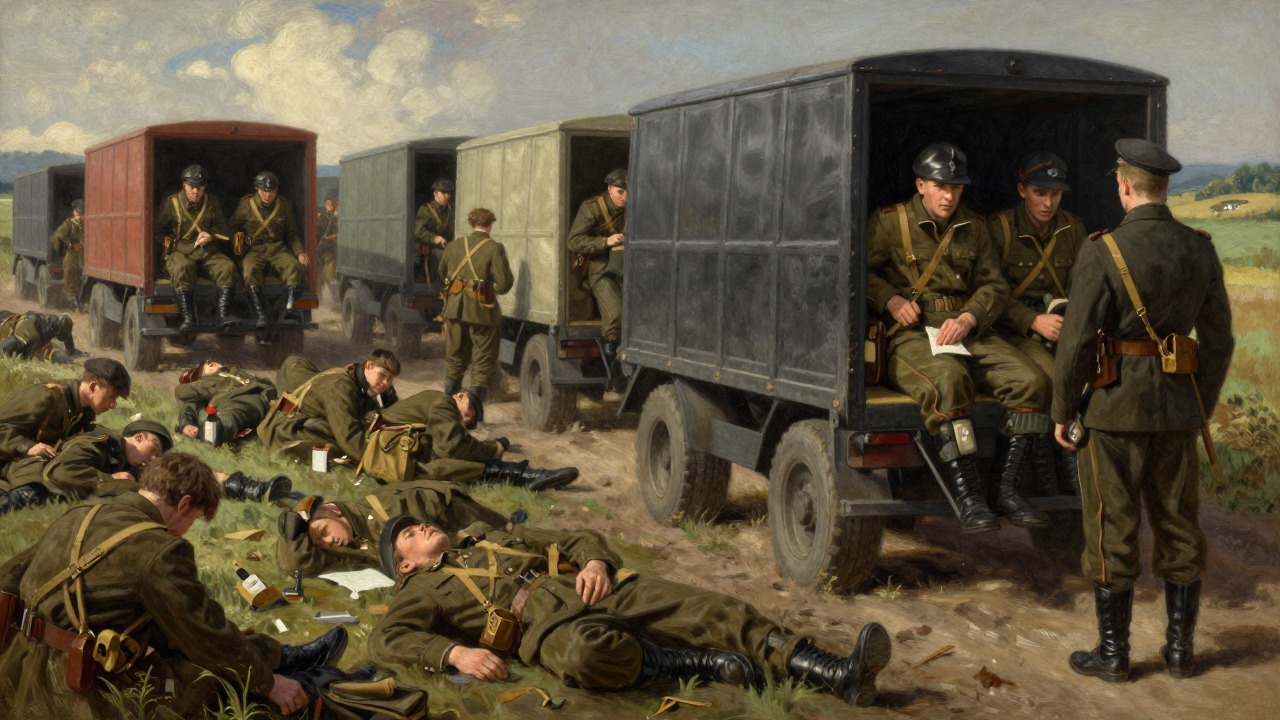
The Company Mustered
The Return from the Line
After weeks of intense fighting, the company is relieved. The lorries carry them back, and they dismount in a daze. The roll call is taken: only thirty-two men answer out of the original one hundred and fifty. The Company Commander, Bertinck, is wounded but alive.
The Dreadful Smallness
The number thirty-two is a stark symbol of the war's toll. The men stand in a short line, a remnant. The chapter ends with the command to march easy, and the survivors trudge off into the morning mist.
The Weight of Loss
This node marks a turning point: the company is decimated, and the survivors are forever changed. The count of thirty-two will dwindle further as the war continues.
The Summer of 1918
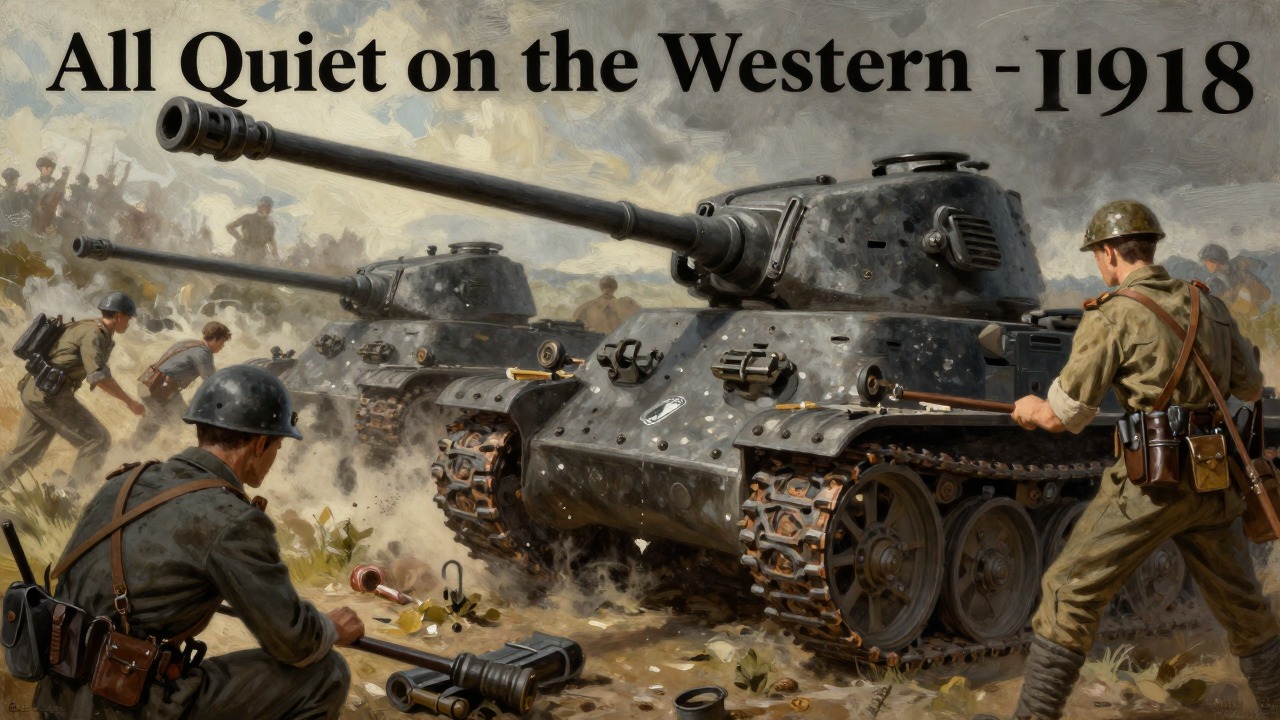
The Summer of 1918
The Last Offensive
The summer of 1918 is the most bloody and terrible. The company is thrown into a series of attacks and counterattacks. The men are exhausted, starved, and demoralized. Rumors of peace spread, but the fighting continues. The tanks are now a terrifying weapon.
The Death of Friends
Bertinck falls while taking out a flamethrower team. Leer dies of a hip wound. The company loses many of its remaining old hands. The narrator notes that the best soldiers are gone.
The Sense of Impending End
Despite the chaos, a desperate hope for an armistice persists. The days are filled with horror, but also with the beauty of the summer landscape. The contrast between the idyllic nature and the slaughter is poignant.
The Final Days and Armistice
The Final Days and Armistice
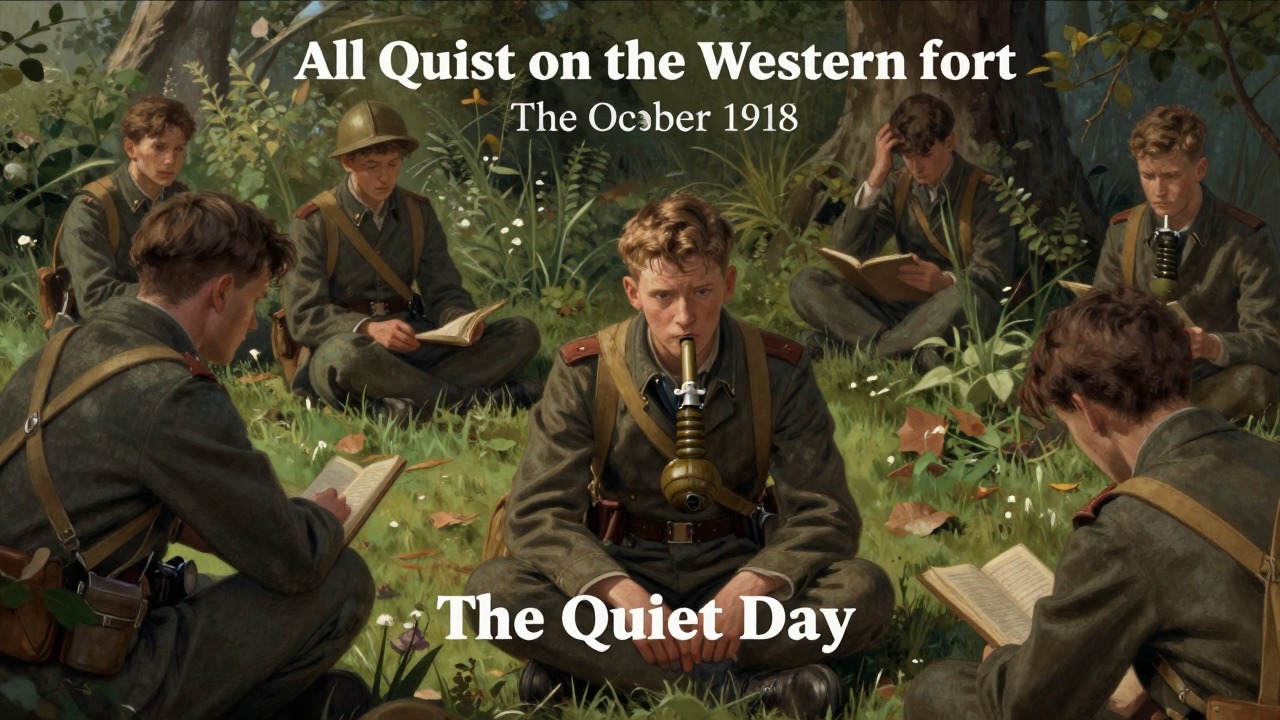
The Quiet Day
October 1918. Paul has fourteen days' rest after a gas inhalation. He sits in a garden, contemplating the future. The news of the coming armistice fills him with a mixture of hope and foreboding. He knows he is the last of his class—the seven of them are all dead.
The Death of Paul
On a day so quiet that the army report says only "All quiet on the Western Front," Paul is killed. He is found lying on the earth, his face calm. The report adds nothing more. His death is anticlimactic, a footnote to the war.
The Legacy
The novel ends with Paul's death just before the armistice. His generation is destroyed, and the survivors are left rootless. The final sentence underscores the irony of dying on a day of stillness.
Early in the story, five miles behind the front
During a wiring fatigue, shortly after the opening
After the major bombardment, autumn
Summer 1918, during the final German offensive
October 1918, just before the armistice
